
Breakdown towing
Capture the exact pickup point, vehicle, reported problem and requested destination. On a highway, clarify the direction of travel and a nearby exit or landmark from information the caller already has.
For towing and vehicle recovery
Give dispatch a clear picture of the job while your operators are busy with recoveries. There247 captures pickup and destination details, the vehicle's reported condition and access restrictions, ready for your team to assess.
Keep your existing business number. Assisted setup. Questions and handovers tailored to your towing operation.
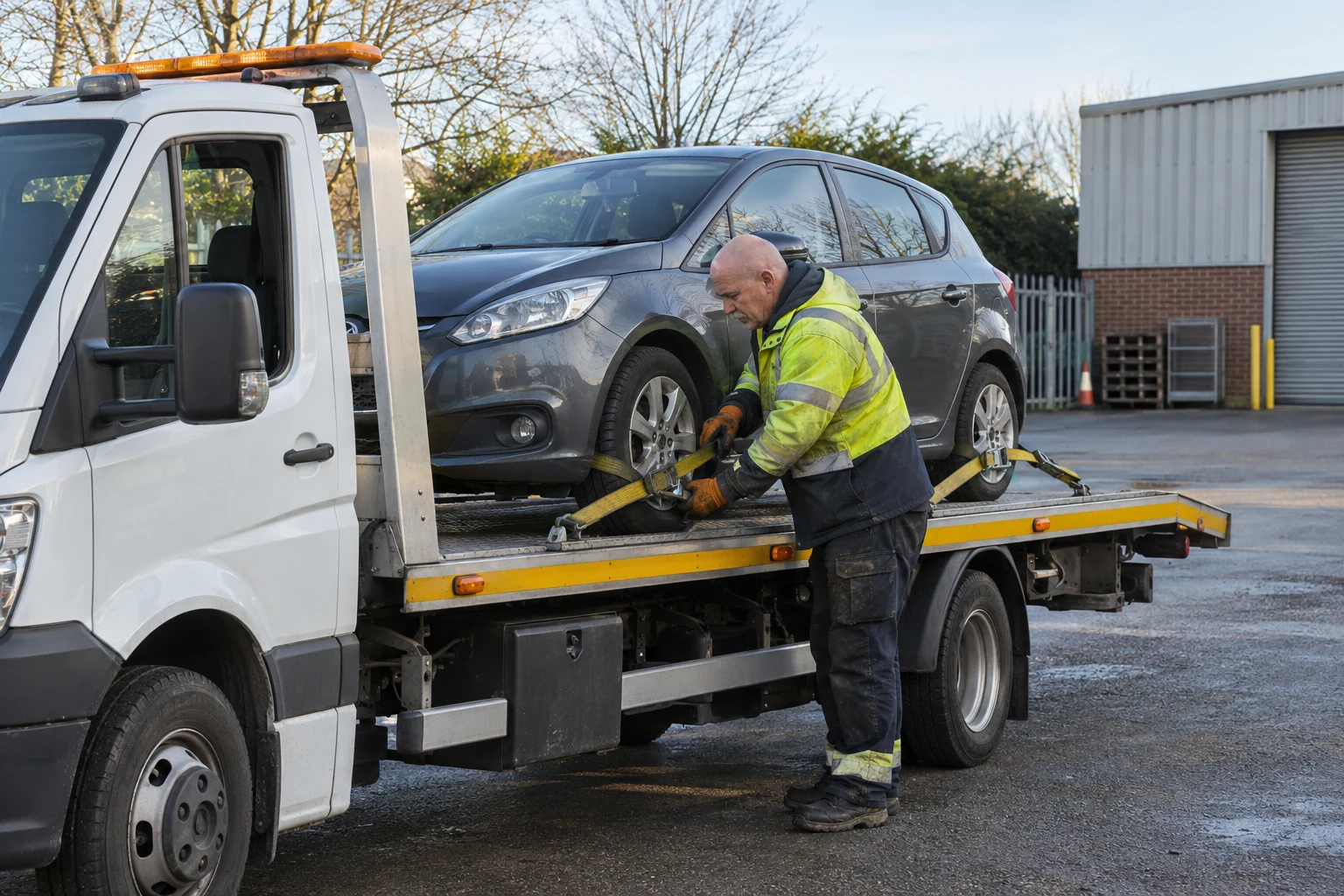
A routine workshop delivery, a non-starting vehicle underground and a collision-damaged car need different follow-up. Chloe, your AI assistant, asks the questions you approve and records what the caller knows, without asking them to test or move a vehicle.
Capture the exact pickup point, vehicle, reported problem and requested destination. On a highway, clarify the direction of travel and a nearby exit or landmark from information the caller already has.
Record reported damage, the vehicle's position and whether emergency services are already involved. Your dispatcher assesses recovery requirements, authorisation and the next action.
Identify basement levels, known height limits, narrow entrances, slopes or difficult ground. Flag anything the caller cannot confirm so dispatch can assess access before assigning equipment.
Collect pickup and delivery addresses, the preferred date, vehicle mobility, key arrangements and the receiving contact. Your coordinator checks the loading requirements and collection window.
Ask for make, model and registration where available. Note whether it is an EV or hybrid, has modifications, or is carrying a load or towing a trailer. Record whether it rolls and steers only if the caller already knows; otherwise mark it unknown.
Confirm the address and the vehicle's position within the property or car park. Include the entrance, level and any access restriction the caller reports. A street address alone may not identify the collection point.
Capture the requested destination, receiving contact and any known receiving hours. Note who has the keys and who will be present at collection. Staff confirm the handover and transport arrangements.
Distinguish a new tow enquiry from an ETA query, changed destination or cancellation request. For an existing job, capture its reference and the change requested so dispatch can check the current status.
Configure Chloe with your service areas, supported vehicle categories, approved pricing information and dispatch contacts. Supplied documents are reference information, not a live view of truck locations, job status or availability.
Illustrative written scenarios, not recordings or customer testimonials. Names, addresses, dates and references are fictional. These examples show intended information; message delivery depends on your setup.
Caller: “My van won't start in the basement. Can I speak to someone about getting it recovered?”
Chloe: “I'll try to connect you to dispatch. First, what is the address, which level are you on, and what model is the van?”
Caller: “A Ford Transit Custom, level B1 at 20 Sample Road. The entrance sign says 2.1 metres.”
Chloe: “Do you already know whether it can roll and steer? If not, I'll mark that for dispatch to check. There's no need to test it.”
Capture: Alex's name and callback number, the van, address, level B1 and reported 2.1-metre clearance. Alex has the keys; mobility and destination are not yet confirmed.
Next step: Dispatch assesses access and equipment before confirming whether the job can be accepted, the price and attendance.
“Hi, this is Chloe, your AI assistant. Alex has requested dispatch. Their Transit Custom won't start on level B1 at 20 Sample Road. They report a 2.1-metre entrance clearance and have the keys; mobility is unknown. Can I connect you to assess the recovery?”
Caller: “Can you take my Corolla to the workshop on Monday morning?”
Chloe: “What are the pickup and workshop addresses, and which Monday do you mean?”
Caller: “30 November. From 8 Sample Road to Sample Garage at 30 Sample Road. It won't start, but it rolled and steered when we parked it. The garage asked for it after nine.”
Chloe: “Who will have the keys at pickup, and who should the coordinator contact at the garage? I'll pass on the requested time for confirmation.”
Capture: Sam's contact details, Toyota Corolla, both addresses, Monday 30 November 2026, the reported mobility and requested delivery after 9 am local time. Sam will meet the driver with the keys; the workshop contact is captured.
Next step: The coordinator checks the receiving arrangements, loading requirements and available transport window.
Caller: “Police are here after a collision. My car has a damaged front wheel. Can I speak to your dispatcher?”
Chloe: “I'll try to connect you. What is the location and the make and model of your car?”
Caller: “A Toyota RAV4 near the junction of Sample Road and Example Street. The left front wheel is damaged.”
Chloe: “I'll pass that on as reported. What name and callback number should dispatch use if the call drops?”
Capture: Jordan's contact details, the junction, vehicle and reported left-front-wheel damage. Police attendance is reported by the caller; recovery permission, vehicle mobility and destination remain unconfirmed.
Next step: Apply the agreed incident-handling process and attempt the requested transfer. Dispatch assesses the recovery and coordinates any required authorisation.
“Hi, this is Chloe, your AI assistant. Jordan has asked for dispatch after a collision near Sample Road and Example Street. They report a RAV4 with left-front-wheel damage and police on scene. Mobility, recovery permission and destination still need checking. Can I connect you?”
SMS enquiry summaries are included with every plan. Email options and plan inclusion are confirmed during setup. Warm transfers are available on Premium and Business, subject to your routing rules and staff availability. If a requested transfer is not accepted, Chloe follows your agreed fallback without promising a response time.
Your team selects the truck and recovery method, checks vehicle-specific requirements and confirms the job, price and estimated arrival. Chloe records caller-reported details; she does not assess whether a vehicle is safe to drive or instruct callers to release brakes, select neutral or attempt a recovery.
Agree an emergency process before activation. In New Zealand, immediate danger, serious injury or fire calls for 111; routine enquiry questions must not delay emergency help. There247 is not an emergency service.
Insurance, roadside-assistance entitlements, tow authorisation and stored-vehicle release stay with the relevant authorised people. A summary does not confirm dispatch, cover, payment or release.
Use an AI greeting and your approved transcription and summarisation disclosure. Collect only the information needed for the enquiry.
Provide coverage areas, vehicle categories, hours, quoting rules and exclusions. Include the questions that help your team assess EVs, modified vehicles, loaded vans and restricted-access jobs.
Separate new jobs, planned transport and existing-job updates. We help configure coverage, enquiry recipients and fallback contacts, and check the forwarding options available for your existing number.
Test these scenarios, an uncertain location, an unknown answer and a transfer nobody accepts. Check the actual summary receipt and dispatch follow-up process. Our team can help update the setup as your operation changes.
She captures the request and passes it through your agreed process. Your dispatcher confirms truck availability and the estimated arrival. The enquiry itself does not allocate a truck.
Chloe can ask for known landmarks, a nearby junction, direction of travel or the vehicle's position within a site. Uncertain details should be marked for dispatch to clarify, without asking someone to walk into traffic or leave a safe position to investigate.
It can record the model and reported condition and flag the enquiry for your team. Operators decide the handling method and equipment; Chloe does not give technical towing instructions.
It can capture the job reference and an ETA, destination-change or cancellation request. Without a confirmed live connection to your dispatch system, it cannot see the truck's location or confirm a change has been completed.
Yes. Agree when There247 answers and check your provider's forwarding options. Keep your duty contacts current and test the actual routing. Call answering does not guarantee your fleet is available at that time.
The seven days start once call forwarding is configured and your There247 service is activated. We help configure and test call handling first. No credit card is required to start.
Tell us which jobs you handle, what dispatch needs to know and where enquiries should go. We'll help configure and test Chloe's call handling around your operation.
Your plan, included services, allowances and any usage or phone-provider forwarding charges are confirmed before you subscribe.
| Top |
Turn your calls into business.
New Zealand based. Helping businesses answer calls, capture enquiries and get them to the right people.
AI call answering is available 24/7. Our team usually responds to sales and setup enquiries the same New Zealand business day.
Calls to us may be answered by There247, an AI call answering service, and may be transcribed and summarised so our team can follow up.